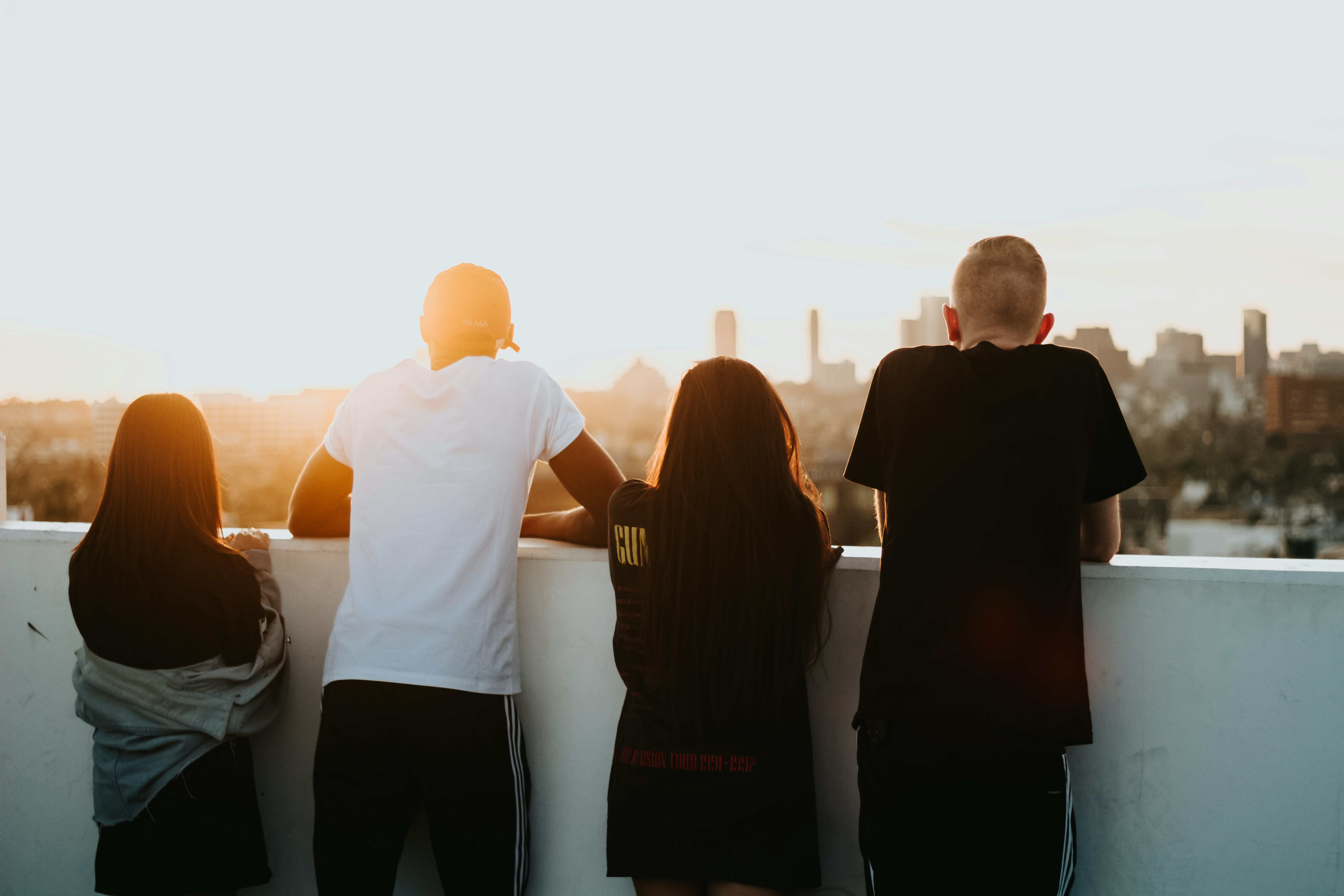
When a grandmother passes, her adult grandchildren are often the ones who do the most to share the news.
They're the ones who post to Instagram. Who text the family group chat. Who tell the college friends who knew her from visits home. They're comfortable with digital, fast with their phones, and genuinely motivated to make sure people find out.
And they're also the ones who don't know where to look to reach the people outside their network. The childhood neighbor. The woman from her book club. The coworker from the job she retired from twenty years ago.
They know how to share. They don't always know how to reach.
That's where you come in.
A Generation That Gets News Differently
The grandchildren sitting across from you in the arrangement conference grew up in a different media environment than the one the newspaper obituary was built for.
According to Pew Research Center, only 15% of young adults say they follow the news all or most of the time, compared to 62% of the oldest Americans. They're not disengaged from information. They're just finding it differently. A 2025 Reuters Institute Digital News Report found that for the first time in the United States, more people now get news from social and video platforms (54%) than from television (50%) or news websites (48%).
But here's what's worth knowing: younger people haven't abandoned local news. They've just moved it.
A 2025 study from Northeastern University's Reinventing Local TV News Project found that 91% of 18- to 34-year-olds get news and information from at least one news platform every week. They're watching local TV clips on social media. They're following local stations on Instagram and TikTok. They're seeing local news content every day, just not necessarily at 6pm on a television set.
The news still reaches them. It just arrives differently.
What This Means for How a Loss Gets Announced
A family losing a parent or grandparent today often includes multiple generations, each of whom processes information in a completely different way.
The eldest members of the family may still read the paper. They may watch the evening news at the same time every night. The newspaper notice and a broadcast announcement on local TV reach them exactly as intended.
The adult children in their 40s and 50s are a mix. Many are on social media. Many also still watch local news, especially in the morning. Broadcast and online work well here.
The grandchildren in their 20s and 30s are almost entirely digital and social. A family post reaches their immediate network. A broadcast announcement that also lives on the news station's website reaches them when they're scrolling through local news content online, which they do more than most people realize.
The people outside any of these family members' networks, the former colleagues, the old friends, the community members who aren't connected to anyone in the family on social media, are most reliably reached by broadcast. Television cuts across networks. It doesn't require a connection to find someone.
The Insight Families Don't Arrive With
Most families walking into an arrangement conference haven't thought about this yet.
They're thinking about the service. About who to call. About the hundred decisions that need to happen in the next 48 hours. They're not thinking about media strategy for a death announcement.
You are. Or you can be.
The families who feel most supported after a service are often the ones who were guided through this question before the service. Who were asked: where are the people who loved this person? Are they all here, or are they in a dozen different cities? Are they the kind of people who read the paper, or the kind who would find out from a post, or the kind who would only know if they happened to see it on the news?
That conversation is part of the care you already provide. It just needs the tools to match it.
Where the Community Actually Gathers Now
Social media handles the inner circle well. The people the family is already connected to.
Broadcast handles everyone else.
Local television content, whether seen on a TV set or shared on the station's social platforms and website, reaches the parts of a community that no single family's network can reach on its own. It travels to people who weren't in the group chat. Who aren't following anyone in the family. Who would have wanted to know, and who will feel, when they find out later, the particular sadness of having missed the chance.
The American Press Institute found that Gen Z and Millennials consume news from an average of six different traditional sources or social media platforms every week. A broadcast memorial announcement that airs on a local affiliate and lives on that station's website has a real chance of reaching the younger members of a community, not because they're watching the evening news in a traditional sense, but because local news content is part of the daily mix they're already moving through.
The generations that grew up online are still findable. They're just findable in different places.
Helping Every Generation Feel the Reach
The goal of a memorial announcement has always been the same: make sure the people who loved someone have the chance to respond.
The tools have to go where those people are. And increasingly, they're everywhere at once, spread across ages, platforms, cities, and habits. Some of them will see a newspaper notice. Some will see a family post. Some will catch a broadcast. Some will find the announcement on a news station's website during their lunch break.
Each channel adds someone the others would miss.
You're the one who understands, before the family fully does, how wide that circle of love actually is. Helping them reach all of it is one of the most meaningful things you can do in those first difficult days.
The generation that grew up online is losing people too. They want to find out. They want to show up.
You can help make sure they do.
Chptr partners with funeral homes across more than 132 TV markets to deliver Broadcast Memorial Announcements on local affiliate stations and their digital platforms. If you're thinking about how to reach families and communities across every generation, we'd be glad to talk.