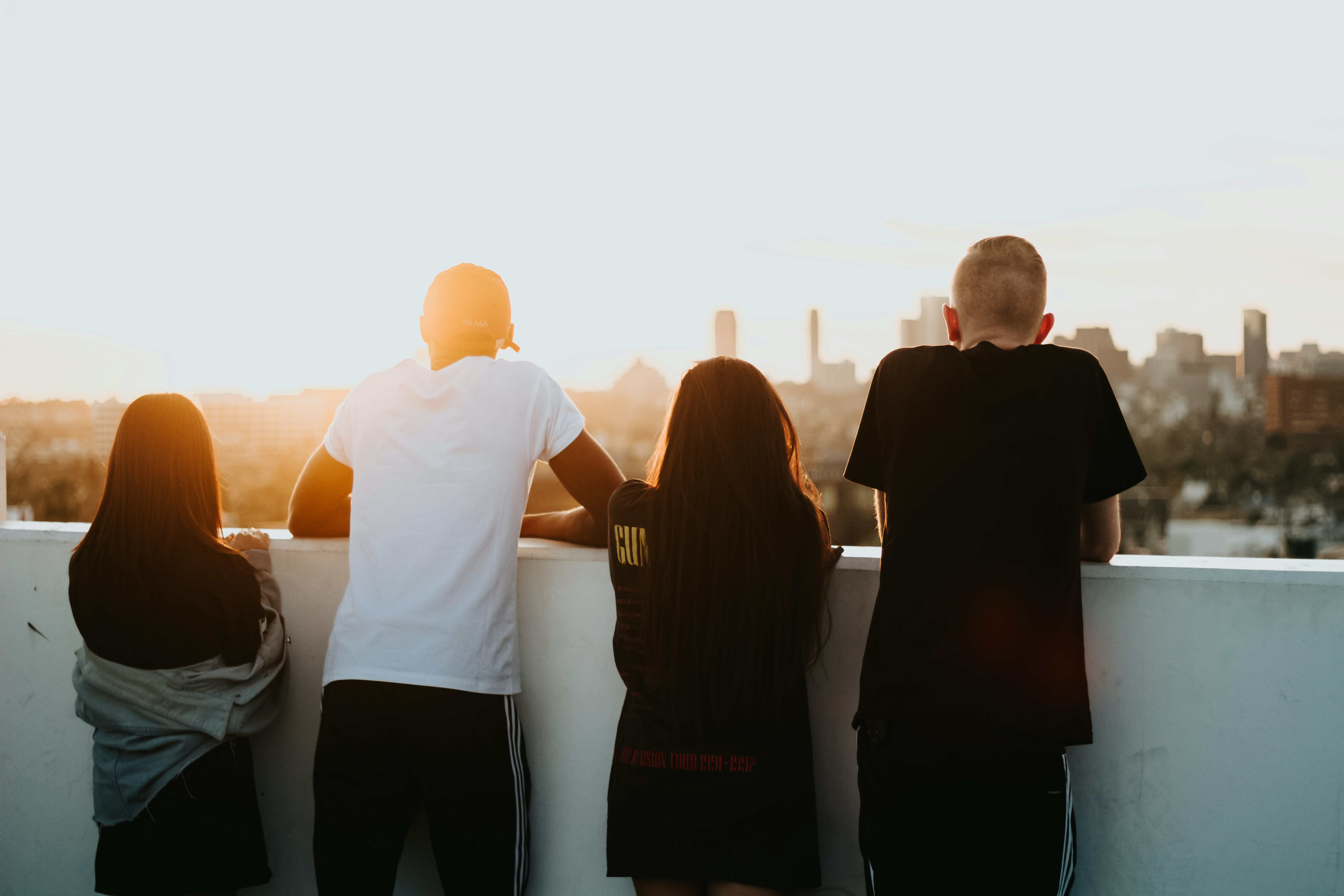
When someone passes, the people who loved them don't all live in the same place anymore.
They're in Phoenix and Portland and Pittsburgh. They're the coworker from thirty years ago who moved away and never lost touch with the family, just with the local paper. They're the childhood friend who would absolutely have come if she had known. The former neighbor. The college roommate. The people from church who relocated when the plant closed.
They loved this person. They just aren't in the same zip code.
You know this before anyone else does. You sit with families at the very beginning of it, and you understand, often better than the family themselves, how far that love actually traveled. That knowledge is one of the most valuable things you carry into an arrangement conference.
The question worth sitting with is whether the obituary travels just as far.
The Community Around a Life Has Grown
For most of the last century, a newspaper notice was the right answer to a simple question: how do we let people know?
It worked because communities were mostly local. The people who needed to know were reading the same paper, in the same town, on the same morning.
That world is still real in some places. And in those places, the newspaper notice does what it has always done.
But for most families today, the community around a life looks different. NFDA's 2024 Cremation and Burial Report notes that families are growing more geographically dispersed, a shift that is reshaping how communities experience loss and how services get planned. Communities now form around shared history rather than shared geography. A life well lived touches people across cities, states, sometimes countries.
That's not a problem. It's a reflection of how rich and wide a life can be.
The opportunity is to help families reach all of it.
What It Means to Truly Reach a Community
There is something that happens when the people who loved someone find out in time.
They show up. They call. They send flowers on behalf of a workplace of forty people who all knew and liked her. They tell the story at the reception that the immediate family had never heard, the one that makes everyone laugh and cry at the same time. They are part of how a family begins to feel that the life they lost was seen by more than just them.
Grief shared travels differently than grief carried alone.
You already understand this. The care you provide doesn't end at the arrangement. It extends into how a community learns about a loss, how it gathers, and how it begins to heal together. The families who feel most held after a service are often the ones whose community showed up in full.
Reach is part of the care.
Where People Are Now
Social media has become part of how many families share the news, and it works well for what it does. A family post travels fast. It reaches the people already connected to the family's immediate network.
And the people who aren't in that network are often the ones who would most want to know.
The high school teacher. The former colleague. The neighbor who moved away a decade ago. The extended family member who isn't on any platform but watches the evening news every night.
Social sharing deepens reach within a network. It doesn't expand it beyond one.
That's where other channels come in. According to NFDA's 2025 Consumer Awareness and Preferences Report, 58.3% of respondents have now attended a funeral at a non-traditional location. Where people gather to mark a life has changed. Where they learn about it needs to change with it.
The Channels That Travel
You're already meeting families where their communities actually are.
Broadcast Memorial Announcements on local television put a tribute on the stations people are already watching, in the markets where family and community members live. Not just in one city. In any market. A service in Indianapolis can reach people watching the evening news in Atlanta, in Chicago, in wherever the people who loved her ended up. Local TV news remains one of the most trusted media sources in the country, specifically among the people most likely to have known and loved the person being memorialized.
Online memorial pages give the announcement a permanent address. Something that can be found, shared, and revisited. Something that exists beyond a single print date.
Radio delivers a tribute to the commuter, the rural listener, the person who will hear something between songs on the way home from work and feel, for a moment, that their community is taking care of them.
None of these replace the newspaper notice for the audiences it still reaches beautifully. They travel alongside it. They go where the community went.
You Already Know How Far It Traveled
You're the only one who knows the full picture before the service.
You know the family has people in three states. You know the deceased spent thirty years at a company across town and that her former colleagues would want to know. You know what kind of community gathered around this life, and roughly how far it spread.
That knowledge, paired with the right tools, is how a family's full community gets to show up.
The obituary is not just a notice. It's an invitation. And the more people who receive it, the more fully a life gets honored.
Love travels further than a newspaper.
You can help it get there.
Want to understand all the options for reaching a family's full community? Read our full guide: How Far Should an Obituary Reach.
Chptr partners with funeral homes across every TV market nationwide to deliver Broadcast Memorial Announcements on local affiliate stations. If you're exploring what's possible, we'd be glad to talk.